End-to-end ownership of a LinkedIn channel: strategy, copywriting, design, scheduling, and reporting, for an AI-native platform targeting decision-makers at global banks. Built from scratch. Run solo.
The platform builds Vertical AI purpose-built for banking and financial services, spanning collateral management, prime brokerage, structured products, and direct lending. The target audience is senior: Front Office, Middle Office, and Operations leads at global tier-1 institutions who are time-poor and highly selective about the content they engage with.
When I joined, LinkedIn was the main outbound channel but had no strategy behind it. There was no editorial structure, no consistent cadence, and no single person responsible for it. I was brought in to own that from the ground up.
The bulk of day-to-day output was client-facing and confidential: pitch decks, bespoke product presentations, and meeting materials produced for client calls and demos. LinkedIn sat above that as the brand-building layer, reaching the same decision-makers through thought leadership and product positioning.
Target audience: Head of Collateral Management, VP Operations, Front Office Technology leads, and Chief Risk Officers at institutions including HSBC, Nomura, Barclays, J.P. Morgan, Citi, Bank of America, and DRW.
Every post had a job: build the "Vertical AI vs. general-purpose GenAI" positioning and reinforce one of the four product lines. Rotating through each vertical on a monthly basis meant the feed read as a coherent product story rather than a series of disconnected announcements.
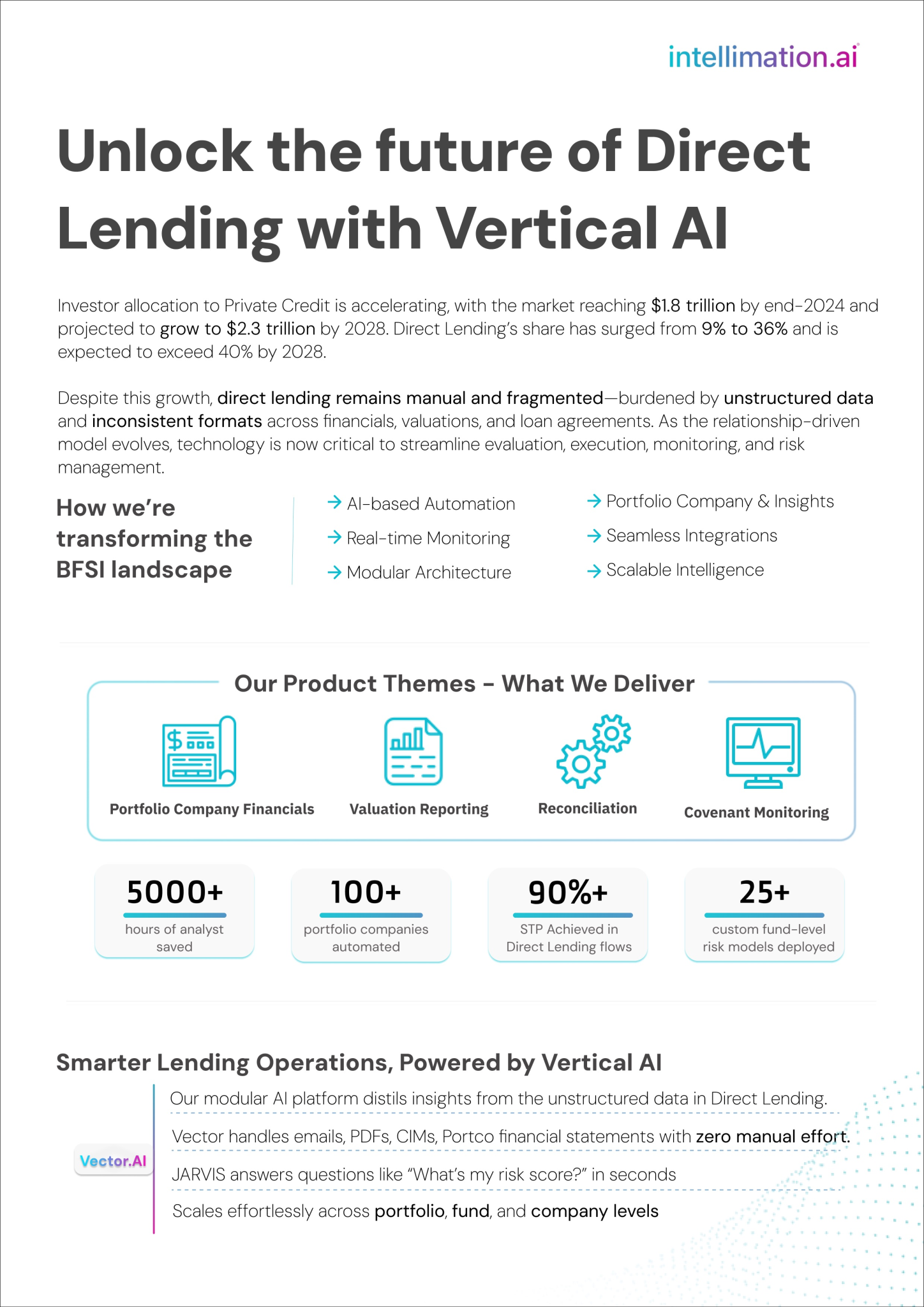
Origination, servicing and compliance workflows, connecting AI capability to everyday pain points for lending teams.
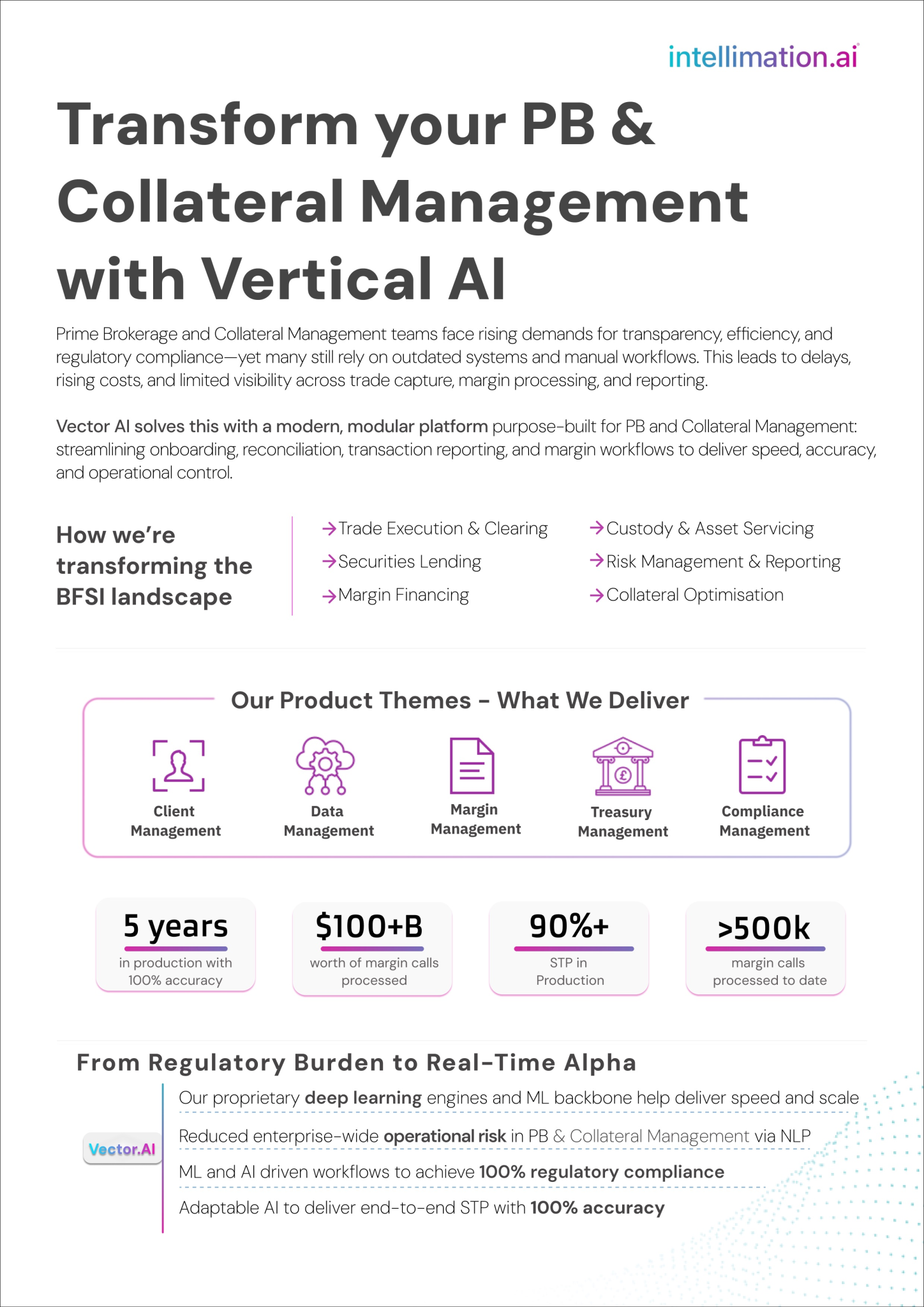
Post-trade efficiency and regulatory compliance, tied closely to SRP Europe and the Collateral Management Summit.
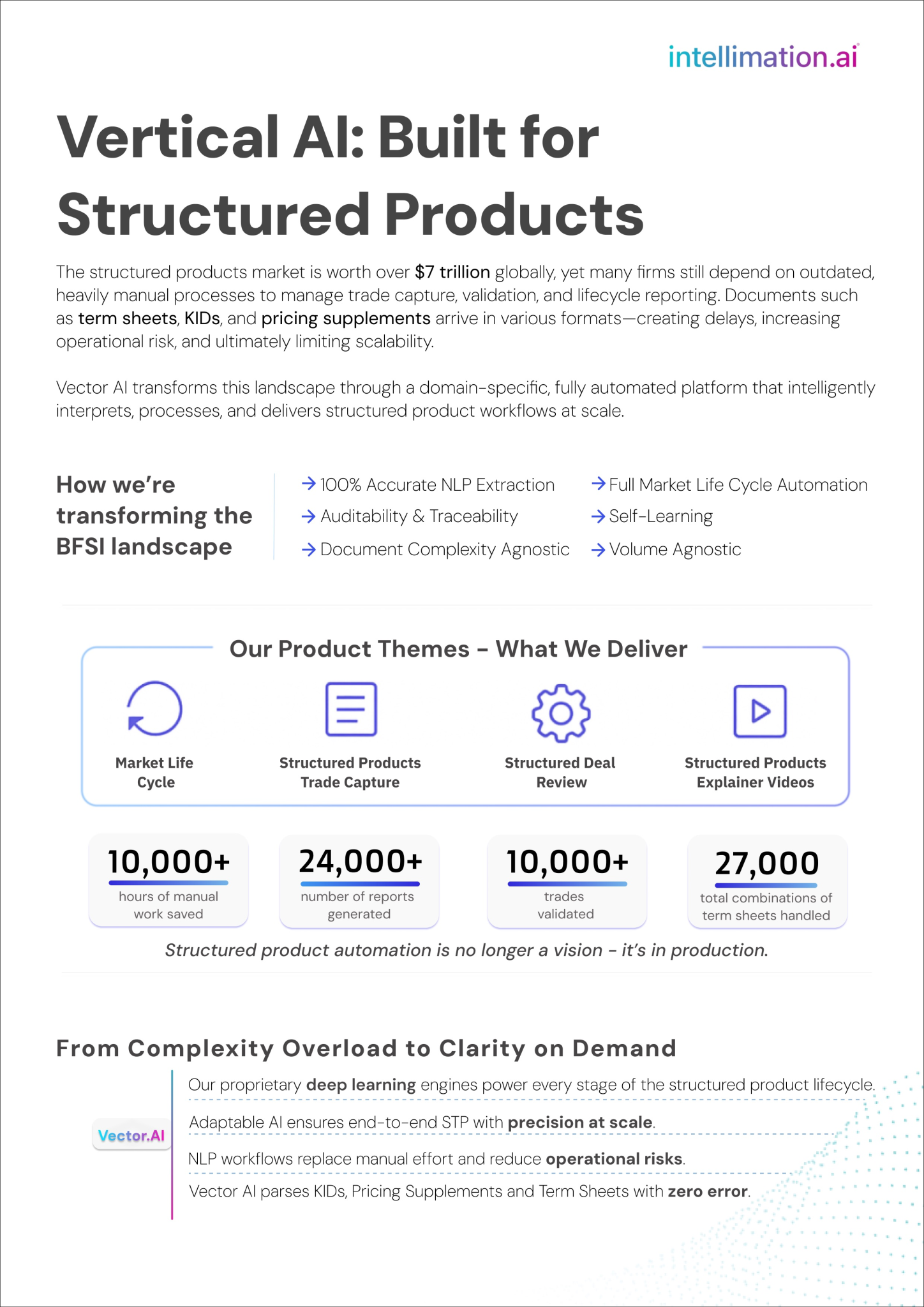
NLP-driven term-sheet automation, positioning Vertical AI in a $7tn market where unstructured data is the main bottleneck.
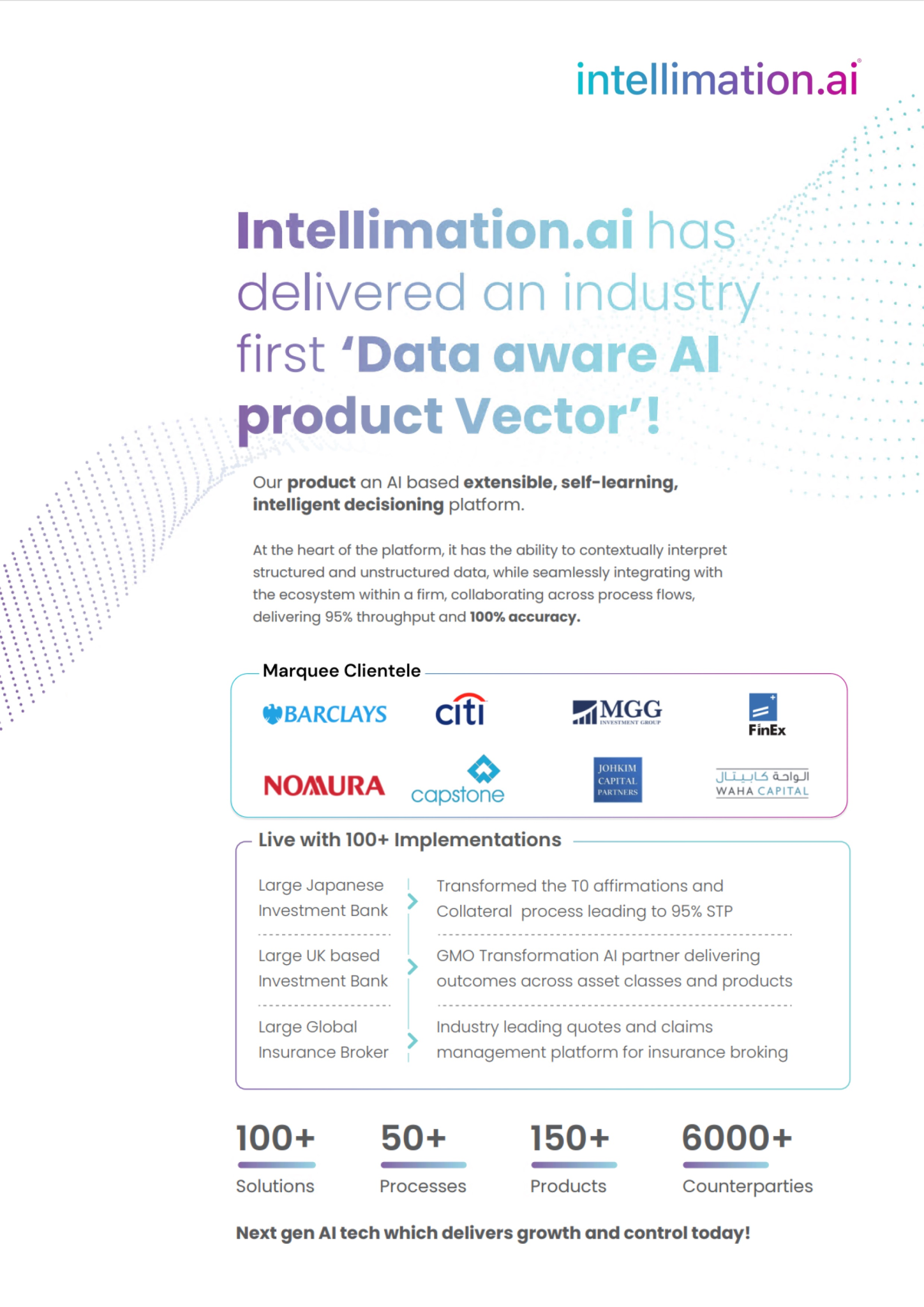
Front-to-back automation narratives bridging Front Office and Operations for buy- and sell-side firms.
Full ownership across every stage of the content lifecycle, from audience research to post-campaign analytics. Quality over quantity: every post was planned, reviewed, and tied to either a product pillar or a live event.
Used LinkedIn Sales Navigator to map BFSI decision-makers, track competitor content, and identify the angles and formats that drove engagement in the space before writing a single post.
Built a rolling monthly calendar in Hootsuite, replacing manual Excel tracking, with each pillar on a fixed day and event-aligned content layered in so there was never a gap or a missed opportunity.
Wrote every post in a direct, B2B-appropriate voice with clear stat call-outs and a "book a demo" CTA. Designed all LinkedIn banners and event graphics in Canva and Figma to keep the feed visually consistent.
Beyond LinkedIn, the majority of output was confidential B2B collateral: product pitch decks, bespoke meeting materials, and PowerPoint presentations built for daily client calls, demos, and sales conversations.
Set up a structured approval workflow in Hootsuite with the Director of AI Products and Sales Partner. Co-ordinated the wider London team to amplify event content across personal profiles.
Tracked impressions, clicks, reactions, and shares in LinkedIn Analytics monthly. Used data to prioritise event-led content and rework underperforming formats.
Alongside the social strategy, I produced a four-piece print and digital brochure library, one per product line, giving the sales team credible, on-brand collateral to back every pitch and conference appearance.
Monthly reach increased steadily as the content cadence was established, with the strongest results in Q4 driven by event activations and a more targeted posting approach. November was the peak month, supported by the Collateral Management Summit and year-end outreach activity.
Figures pulled directly from LinkedIn's organic analytics for the company page. A quality-over-quantity approach with roughly one post per week, each tied to a product pillar or live event, and tracked monthly against engagement and reach targets.
The best-performing post was a short "we're heading to NYC" announcement, not a data-heavy thought-leadership piece. Event-led narrative consistently outperformed pure stat call-outs. Lead with the moment; add the number second.
The Collateral Summit recap drove 51.7% engagement with a single "book a demo" link. Next time, every post gets a CTA, not just event recaps.
Low comment volume across the campaign. Ending posts with a genuine question and actively replying is the fix: comments carry more algorithmic weight than reactions on LinkedIn.
Posting dips directly correlate with impression drops. I'd batch-produce content ahead of busy periods so the feed never goes cold between events.